

Eggs have been a breakfast staple for years, but when low-calorie diets and calorie counting became popular, many people began opting to throw out the yolk and only eat the whites to reduce calories. However, the yolk is where nearly all the nutritional value is and eaten whole makes it one of the most affordable superfoods on the planet. (1)
Here are 7 health benefits of eggs that have been confirmed in human studies. We also clarify the facts concerning cholesterol and eggs.
Eggs Are Incredibly Nutritious
A whole egg is one of the most nutrient dense foods available
A single large boiled egg contains:
- 77 calories
- 6 grams of protein
- 5 grams of healthy fats
Loaded with key vitamin and minerals:
- Vitamin A: 6% of the RDA
- Folate: 5% of the RDA
- Vitamin B5: 7% of the RDA
- Vitamin B12: 9% of the RDA
- Vitamin B2: 15% of the RDA
- Phosphorus: 9% of the RDA
- Selenium: 22% of the RDA
- Eggs also contain good amounts of Vitamin D, Vitamin E, Vitamin K, Vitamin B6, Calcium and Zinc and various other trace minerals.
Let’s Talk Cholesterol
For many decades eggs has been unfairly demonised. Everyone from doctors to the media has been confused about cholesterol. The fact is, the cholesterol in foods, such as eggs, and the cholesterol found in your blood are not the same thing. In fact, a single large egg contains 212 mg, which is over half of the recommended daily intake of 300 mg. But frequently eating eggs has been shown not to adversely affect blood cholesterol but actually improve cholesterol markers more than the much heralded “heart healthy” oatmeal. (2,3)
The liver actually produces large amounts of cholesterol every single day. When we eat more eggs, the liver just produces less cholesterol instead, so it evens out. (4,5)
It is well known that having high levels of LDL (the “bad”) cholesterol is linked to an increased risk of heart disease. But did you know there are subtypes of LDL; small/dense LDL particles and large LDL particles. (6,7)

Many studies have shown that people who have predominantly small, dense LDL particles have a higher risk of heart disease than people who have mostly large LDL particles. (8,9,10)
Eggs turn LDL cholesterol from small, dense to large particles, therefore reducing the risk of heart disease. (11,12)
Eggs also increases HDL (the “good”) cholesterol. People who have higher levels of HDL usually have a lower risk of heart disease, stroke and various health problems. (13,14,15,16,17)
In one study, 2 eggs per day for 6 weeks increased HDL levels by 10% (18,19,20)
In one review of 17 studies with a total of 263,938 participants, no association was found between egg consumption and heart disease or stroke. (21)
Many other studies have led to the same conclusion. (22,23)
Eggs Are High in Quality Protein
Eggs are an excellent source of protein, with a single large egg containing 6 grams.
Eggs contain all the essential amino acids in the right ratios, so our bodies are well equipped to make full use of the protein in them, this means they have a high bioavailability value.
Milke most high protein foods, eggs score high on the Satiety Index, which measures the ability of foods to induce feelings of fullness and reduce subsequent calorie intake, in comparison to intake of fats and carbs. (24,25,26,27,28)
Additionally, eating a diet high in protein may reduce obsessive thoughts about food by up to 60%. It may also cut the desire for late-night snacking by half. (29,30)
Eggs May Boost Your Metabolism
Eating a high-protein diet has been shown to boost metabolism by up to 80–100 calories a day, through a process called the thermic effect of food. The thermic effect of food is the energy required by the body to metabolise foods, and is higher for protein than for fat or carbs. (31,32,33)
This means that high-protein foods, such as eggs, help you burn more calories.
Eggs for Breakfast is a Great Way To Start The Day
Eating eggs for breakfast seems to be especially beneficial for weight loss.
Many studies have compared the effects of eating eggs in the morning versus eating other breakfasts with the same calorie content.
A study in men showed that an egg breakfast significantly reduced calorie intake for the next 24 hours, compared to a bagel breakfast. The egg eaters also felt more full.
Furthermore, the egg breakfast caused a more stable blood glucose and insulin response, while also suppressing ghrelin – the hunger hormone. (34)
Another study in 30 healthy and fit young men compared the effects of three types of breakfasts on three separate occasions. These were eggs on toast, cereal with milk and toast, and croissant with orange juice.
The egg breakfast caused significantly greater satiety, less hunger and a lower desire to eat than the other two breakfasts.
Furthermore, eating eggs for breakfast caused the men to automatically eat about 270–470 calories less at lunch and dinner buffets, compared to eating the other breakfasts. (35)
This impressive reduction in calorie intake was unintentional and effortless. The only thing they did was to eat eggs at breakfast.
Eggs Are Beneficial for Eye Health
There are several nutrients that help counteract some of the degenerative processes that can affect our eyes as we age.
Two of these are powerful antioxidants called Lutein and Zeaxanthin, which get stored in the retina of the eye. (36,37)
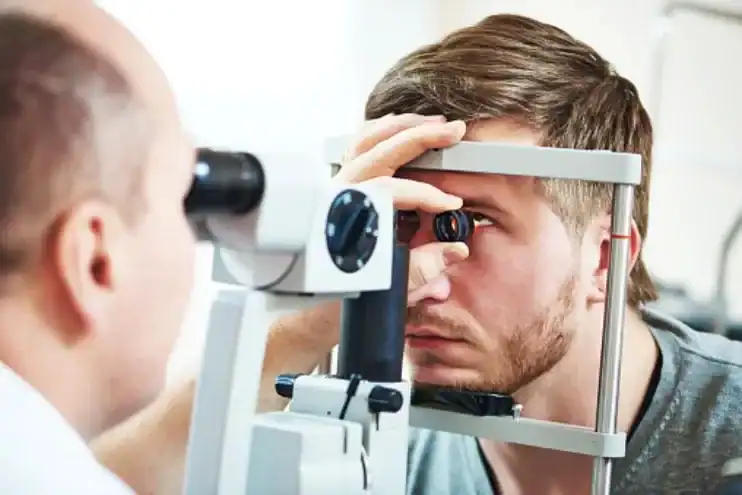
Studies show that consuming adequate amounts of these nutrients can significantly reduce the risk of cataracts and macular degeneration, two very common eye disorders. (38,39,40)
Egg yolks actually contain large amounts of both Lutein and Zeaxanthin.
In one controlled trial, eating just 1.3 egg yolks per day for 4.5 weeks increased blood levels of Lutein by 28-50% and Zeaxanthin by 114-142% (41)
Eggs are also high in Vitamin A, which deserves another mention here. Vitamin A deficiency is the most common cause of blindness in the world. (42)
Healthy Brain and Cognition
Eggs are among the best dietary sources of choline, an essential nutrient involved in cognitive function
Choline is used to make a critical neurotransmitter and support other neural functions. (43)
Most people are deficient in choline and eating a single egg can provide more than 100 mg of this very important nutrient.
Scientists are now testing the role of eggs in protecting against Alzheimer’s disease and preserving cognitive function during aging. Early studies show the combination of easily assimilated nutrients in whole eggs can improve working memory and recall in the elderly.
References
1. https://ndb.nal.usda.gov/ndb/foods/show/118
2. http://www.sciencedirect.com/science/article/pii/0026049565900028
3. https://www.ncbi.nlm.nih.gov/pubmed/22037012
4. http://atvb.ahajournals.org/content/16/10/1222.long
5. https://www.ncbi.nlm.nih.gov/pmc/articles/PMC24942/
6. http://archinte.jamanetwork.com/article.aspx?articleid=601301
7. http://www.nejm.org/doi/full/10.1056/NEJMoa021993
8. http://www.sciencedirect.com/science/article/pii/S0167527399001072
9. https://www.ncbi.nlm.nih.gov/pubmed/7858908
10. http://jama.jamanetwork.com/article.aspx?articleid=407945
11. https://www.ncbi.nlm.nih.gov/pubmed/19369056
12. http://www.sciencedirect.com/science/article/pii/S0026049504000708
13. http://circ.ahajournals.org/content/111/5/e89.full
14. http://europepmc.org/abstract/MED/11374850
15. https://www.ncbi.nlm.nih.gov/pubmed/21296318
16. http://circ.ahajournals.org/content/79/1/8.short
17. https://stroke.ahajournals.org/content/31/8/1882.full
18. https://www.ncbi.nlm.nih.gov/pubmed/8120521
19. https://www.ncbi.nlm.nih.gov/pubmed/23021013
20. http://jn.nutrition.org/content/138/2/272.long
21. http://www.bmj.com/content/346/bmj.e8539
22. http://onlinelibrary.wiley.com/doi/10.1111/j.1467-3010.2006.00543.x/full
23. https://www.ncbi.nlm.nih.gov/pubmed/11111098
24. https://www.ncbi.nlm.nih.gov/pubmed/7498104
25. https://www.ncbi.nlm.nih.gov/pubmed/25889354
26. http://www.sciencedirect.com/science/article/pii/S0939475309000441
27. https://www.ncbi.nlm.nih.gov/pubmed/18448177
28. https://www.ncbi.nlm.nih.gov/pubmed/14557793
29. https://www.ncbi.nlm.nih.gov/pubmed/20847729
30. https://www.ncbi.nlm.nih.gov/pubmed/16002798
31. https://www.ncbi.nlm.nih.gov/pubmed/11838888
32. https://www.ncbi.nlm.nih.gov/pubmed/9683329
33. https://www.ncbi.nlm.nih.gov/pubmed/18249201
34. https://www.ncbi.nlm.nih.gov/pubmed/20226994
35. https://www.ncbi.nlm.nih.gov/pubmed/22948783
36. https://www.ncbi.nlm.nih.gov/pubmed/9286269
37. http://www.sciencedirect.com/science/article/pii/S0014483596902109
38. http://www.iovs.org/content/47/6/2329.short
39. http://www.iovs.org/content/44/6/2461.short
40. http://www.sciencedirect.com/science/article/pii/S0738081X08000126
41. http://ajcn.nutrition.org/content/70/2/247.short
42. http://onlinelibrary.wiley.com/doi/10.1038/npg.els.0002106/abstract
43. https://www.ncbi.nlm.nih.gov/pmc/articles/PMC2782876/