
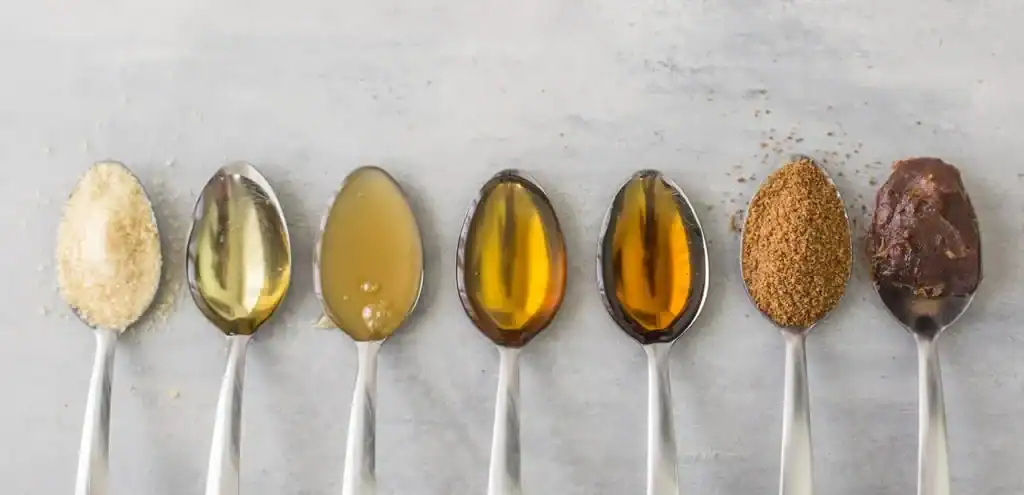
The average Western diet contains an extra 400 calories a day from added sugars and most people have no idea! It has been associated with many health issues including diabetes, tooth decay, obesity, heart disease, certain types of cancer and even poor cognitive functioning. (1) (2) (3)
Before we discuss some of the alternatives to sugar you can use to sweeten your food with, let’s first highlight 4 types of sugar which are detrimental to our health.
Bad Types of Sugar
1. Fructose
Fructose is a simple sugar that is rapidly metabolized by the liver causing a “sugar high.” This quick-acting sugar is believed to lead to increased storage of fat in the liver, resulting in non-alcoholic fatty liver disease, digestive upset and atherosclerosis. (4)
2. High Fructose Corn Syrup
As its name implies, HFCS is very high in fructose. Due to increased pressure on manufacturers to reduce refined sugars, corn growers and affiliated associations have pushed high fructose corn syrup as a natural sweetener. This is simply not true. The vast majority of HFCS is produced from genetically modified corn.
HFCS has been linked to many health issues including weight gain, obesity, diabetes and other serious diseases like cancer. While it’s not an individual ingredient you would cook with, it’s commonly used to sweeten processed foods, soft drinks, salad dressings and condiments. So opting for natural, wholefood and single ingredient food choices which you can cook at home is the ideal approach. (5, 6, 7, 8)
HFCS is also linked to the potential inhibition of leptin, the hormone responsible for telling your brain that you’re full. This is why you can finish a whole pack of biscuits and never feel satisfied?
So why are companies putting it in your food? One word: ‘profit’. HFCS is chemically very similar to table sugar, only a lot cheaper to make. With brand competition, market uncertainty and the recent introduction of the UK sugar tax, companies are under more pressure than ever to satisfy your cravings and their shareholders pockets.
3. Agave Nectar
Agave nectar is produced by the agave plant. In its natural form, agave plant nectar contains strong antioxidant and anti-inflammatory properties. However, none of these beneficial elements are present in the agave that we see in commercial products.

Still, agave nectar is often marketed as a healthy alternative to sugar, but it’s probably one of the unhealthiest sweeteners on the market. Agave nectar is basically high-fructose corn syrup masquerading as a health food.” (9)
It consists of 85% fructose, which is much higher than regular sugar (10). We know by now that high amounts of fructose are strongly associated with obesity and other serious diseases.
4. Artificial Sweeteners
Artificial sweeteners like aspartame, sucralose, ACE K and saccharin have been debated for years but have been deemed technically “safe”, according to the FDA. However, there has been increased scrutiny because of their side effects ranging from headaches and migraines to shrunken thymus glands, impairment of liver and kidney function, and mood disorders.
Top Sugar Alternatives
1. Stevia
Related to the sunflower, Stevia is native to South America and has been used for hundreds of years in that region to support healthy blood sugar levels and prompt weight loss.
Stevioside, the element in the leaves that makes it more than 200 times as sweet as sugar, is available in liquid drops, packets, dissolvable tablets and baking blends. It has zero calories, zero carbohydrates and none of the nasty side effects of artificial sweeteners, making it an ideal natural sweetener.
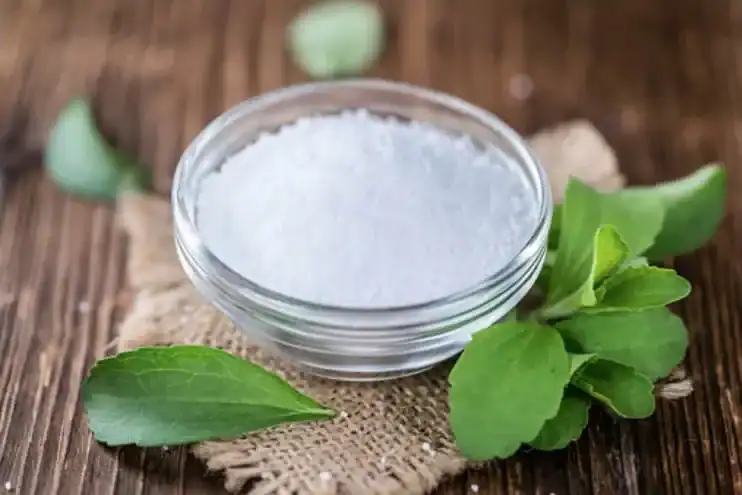
In fact, human studies have shown that stevia is not associated with any adverse health effects (11, 12). Not only is stevia considered safe, it’s also linked to some health benefits.
Several studies show that stevioside, which is one of the sweet compounds in stevia, can lower high blood pressure by 6–14% (13, 14, 15). It has also been shown to lower blood sugar and insulin levels, which may help fight diabetes (16, 17).
It’s worth noting that the two different sweet compounds extracted from the stevia plant — stevioside and rebaudioside A — have slightly different tastes and some people experience a slight metallic aftertaste. If that has been your experience with stevia in the past, try a brand that is higher in the steviosides. Many find it to be sweeter, without a residual aftertaste.
Unlike raw honey, stevia is heat stable, so feel free to use it in any way you desire.
2. Xylitol
Xylitol is a sugar alcohol with a sweetness similar to sugar. It’s extracted from corn or birch cellulose and found in many fruits and vegetables.
Xylitol contains no fructose so it won’t elevate blood sugar (18), additionally at 2.4 calories per gram it’s 40% fewer calories than sugar.
Xylitol is associated with multiple health benefits. Several studies show that it can improve dental health by reducing the risk of cavities and tooth decay (19, 20, 21, 22). It’s antibacterial properties is another reason why it’s used in chewing gum.
Moreover, xylitol increases your body’s absorption of calcium. This is not only good for your teeth but also your bone density, which can help protect against osteoporosis (22, 23, 24, 25).
Xylitol is generally well tolerated, but eating too much of it can cause digestive side effects like gas, bloating and diarrhea.
It’s also important to note that xylitol is highly toxic to dogs. If you own a dog, you should keep xylitol out of reach or avoid having it in the house altogether.
3. Erythritol
Erythritol is also a sugar alcohol, but it contains even fewer calories than Xylitol. It’s commonly found in pears, grapes and watermelons; and is more easily digested by the body than other sugar alcohols like isomalt, mannitol and maltitol.
At only 0.24 calories per gram, erythritol contains 6% of the calories of regular sugar and also closely resembles the taste of sugar, making it an easy switch.
Even better news is, your body does not have the enzymes to break down erythritol, so most of it is absorbed directly into your bloodstream and excreted in your urine unchanged. Therefore, it does not seem to have the harmful effects that regular sugar does.
Moreover, erythritol does not raise blood sugar, insulin, cholesterol or triglyceride levels (26).
Erythritol has been considered safe, is well tolerated and doesn’t seem to have the harmful effects of regular sugar (27, 28, 29), although excessive use can cause a sensitive stomach.
“Less Bad” Sugars
We now discuss some of the natural sweeteners that health-conscious people commonly use in place of refined sugar. While these natural sweeteners may be more nutrient beneficial than regular sugar, they are still a form of sugar and your body still metabolises them the same way, so should be used sparingly.
1. Raw Honey
Raw honey is a true superfood which is packed with enzymes, antioxidants, amino acids, iron, zinc, potassium, calcium, phosphorus, vitamin B6, riboflavin and niacin. Together, these essential nutrients help to neutralise free radicals while promoting the growth of healthy bacteria in the digestive tract.
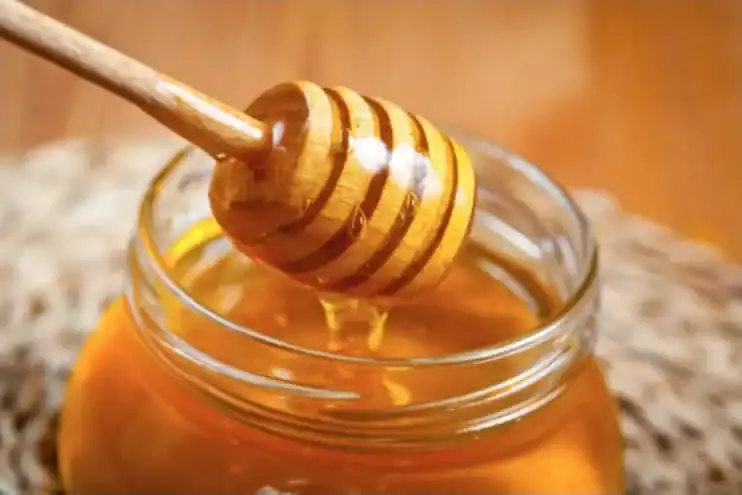
One tablespoon of raw honey has 64 calories and has a lower glycemic index providing a steady blood sugar raise, rather than a dramatic spikes and crashes.
One of the most powerful benefits of raw honey is it contains bee pollen which acts as a histamine blocker against allergies. Unfortunately due to pasteurisation much of this pollen is destroyed in commercially bought honey.
Additionally it’s important not to cook with raw honey. You want to maintain as many of the nutrients in honey as possible, so keep it away from the heat. Look for local raw honey at farmer markets and directly from local beekeepers. The darker the honey, the richer the flavor and the greater the health benefits.
2. Dates

Dates are rich in copper, iron, manganese, magnesium and vitamin B6. They’re also a go-to food source following exercise to replenish potassium, a key electrolyte. From the date palm tree, they are easily digested and help to metabolise proteins, fats and carbohydrates. Evidence shows that dates may help to reduce LDL cholesterol in the blood and may reduce the risk of stroke. Dates are also high in fibre which help negate some of the carbs in the dates and will also support a health bowel.
3. Coconut Sugar
Over recent years there has been an abundance of versatile products derived from the humble coconut. Most people have heard about the benefits of coconut water, coconut milk, coconut flour and, of course, fresh coconut.
Now, more and more people are using coconut sugar as their natural sweetener of choice because it has a lower glycemic index than sugar, which may be partly due to its inulin content. Inulin is a type of prebiotic fibre that has been shown to slow glucose absorption (30).
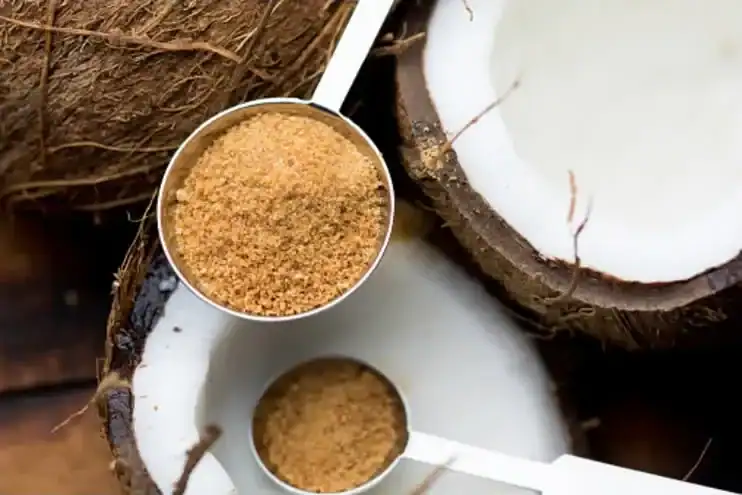
Coconut sugar is versatile and is packed with polyphenols, iron, zinc, calcium, potassium, magnesium, antioxidants, phosphorus and other phytonutrients. It’s extracted from the sap of the coconut palm and then heated. Next, through evaporation, we get coconut sugar. It provides a toasty, nutty taste profile to any dish and beverages.
Nevertheless, coconut sugar is still containing the same high number of calories per serving as regular sugar. It’s also very high in fructose, which is the key reason for avoiding refined sugars in general.
4. Maple Syrup
Native to North America, maple syrup comes in both Grades A and B. While time consuming, maple syrup processing requires only four steps – drilling the hole in the tree, hanging a bucket to catch the sap, boiling to evaporate out the water, and then filtering of any sediment.

Maple syrup is nutrient dense including manganese, calcium, potassium, iron, zinc and at least 24 antioxidants (31, 32) This all-natural sweetener helps to neutralise free radicals and reduce oxidative damage. Select darker, Grade B maple syrups, as they contain more beneficial antioxidants than the lighter syrups. (33). Unlike raw honey, it is heat stable so you can use it to cook virtually any dish.
While maple syrup contains some beneficial nutrients and antioxidants, it’s very high in sugar. It has a slightly lower glycemic index than regular sugar, so it may not raise blood sugar levels as quickly, but it will still raise them (34).
Much like coconut sugar and honey, maple syrup is a slightly better option than regular sugar, but it should still be consumed in moderation.
5. Blackstrap Molasses

Organic blackstrap molasses is highly nutritious, rich in copper, calcium, iron, potassium, manganese, selenium and vitamin B6. Sugarcane and beet molasses has the highest phenolic content and antioxidant activity when compared with other natural and refined sugars (35). It also has more antioxidants than both honey and maple syrup (36).
There are several types of molasses, depending on which level of processing it has gone through. All molasses is obtained from raw cane sugar, made by boiling it until it’s a rich sweet syrup. Blackstrap molasses comes from the third boiling, concentrating its nutrients and providing for its deep rich flavor.
Molasses is a good substitute for refined sugar, but should still be used moderately.
6. Brown Rice Syrup / Rice Malt Syrup

Brown Rice Syrup is a blend of complex carbohydrates, glucose and maltose, meaning it’s totally fructose-free! It starts with brown rice that is fermented with enzymes to break down the starch. The liquid is then heated until the syrup consistency is achieved. The result? A thick, amber-coloured, sweet syrup perfect for recipes calling for corn syrup and other unhealthy sweeteners.
The fermented process helps to break down the sugars into ones that are easily digestible. The fermenting process is key – some BRS are fermented with barley enzymes, meaning it contains gluten. Purchase brown rice syrups that are labeled gluten-free.
While BRS doesn’t have the same impact on our liver as fructose, the high glucose content will still affect our blood sugar levels.
7. Fruit and Veg
Fresh fruit and sweet vegetables are a great way to naturally sweeten food. Using lower fructose options such as kiwi fruit, sweet potato, beetroot, carrot and pumpkin also provide added nutrients and fibre.

For a little more sweetness banana puree provides natural sweetness and a subtle flavour. They’re rich in fibre, potassium, and a good source of vitamins B6 and C. Overripe bananas are best for strong sweetness and puree well.
Real fruit jam are also a great replacements for sugar in recipes. When buying, ideally look for organic, no added sugar and pectin free. Better yet, making your own is easy and economical.
Living healthy doesn’t mean you have to give up sweets entirely; it just means you need to replace unhealthy refined sugars with those suggested above. Stevia is probably the healthiest option, followed by xylitol and erythritol. “Less bad” sugars like raw honey, maple syrup and molasses are slightly better than regular sugar, but should still be used sparingly.
References
1. http://jaha.ahajournals.org/content/2/3/e004796
2. http://www.alphagalileo.org/ViewItem.aspx?ItemId=128132&CultureCode=en
3. http://onlinelibrary.wiley.com/doi/10.1113/jphysiol.2012.230078/abstract
4. http://www.ncbi.nlm.nih.gov/pubmed/16366738
5. https://www.ncbi.nlm.nih.gov/pubmedhealth/PMH0051979/
6. https://www.ncbi.nlm.nih.gov/pubmed/11229668
7. https://www.ncbi.nlm.nih.gov/pubmed/15723702
8. https://www.ncbi.nlm.nih.gov/pubmed/14713323
9. http://www.huffingtonpost.com/dr-jonny-bowden/debunking-the-blue-agave_b_450144.html
10. http://pubs.acs.org/doi/abs/10.1021/jf3027342
11. https://www.ncbi.nlm.nih.gov/pubmed/19961353
12. https://www.ncbi.nlm.nih.gov/pubmed/20370653
13. https://www.ncbi.nlm.nih.gov/pubmed/10971305
14. http://www.sciencedirect.com/science/article/pii/S0278691508002330
15. https://www.ncbi.nlm.nih.gov/pubmed/14693305
16. https://www.ncbi.nlm.nih.gov/pmc/articles/PMC2900484/
17. https://www.ncbi.nlm.nih.gov/pubmed/14681845
18. https://link.springer.com/article/10.1007%2FBF00282594
19. http://journals.sagepub.com/doi/abs/10.1177/0022034513487211
20. https://www.ncbi.nlm.nih.gov/pubmed/12778091
21. https://www.ncbi.nlm.nih.gov/pubmed/1067728
22. https://www.ncbi.nlm.nih.gov/pubmed/21576989
22. https://www.ncbi.nlm.nih.gov/pubmed/21271323
23. https://www.ncbi.nlm.nih.gov/pubmed/4010648
24. https://www.ncbi.nlm.nih.gov/pubmed/9591750
25. https://www.ncbi.nlm.nih.gov/pubmed/11721142
26. https://www.ncbi.nlm.nih.gov/pubmed/8039489
27. http://www.sciencedirect.com/science/article/pii/S0273230096901105
28. http://www.sciencedirect.com/science/article/pii/027153179600036X
29. https://www.ncbi.nlm.nih.gov/pubmed/9862657
30. https://www.ncbi.nlm.nih.gov/pubmed/8814212
31. http://nutritiondata.self.com/facts/sweets/5602/2
32. http://cfs.nrcan.gc.ca/publications?id=28297
33. http://www.ncbi.nlm.nih.gov/pubmed/23122108
34. http://www.glycemicindex.com/foodSearch.php?num=1855&ak=detail
35. http://www.ncbi.nlm.nih.gov/pubmed/24007486
36. https://www.ncbi.nlm.nih.gov/pubmed/19103324